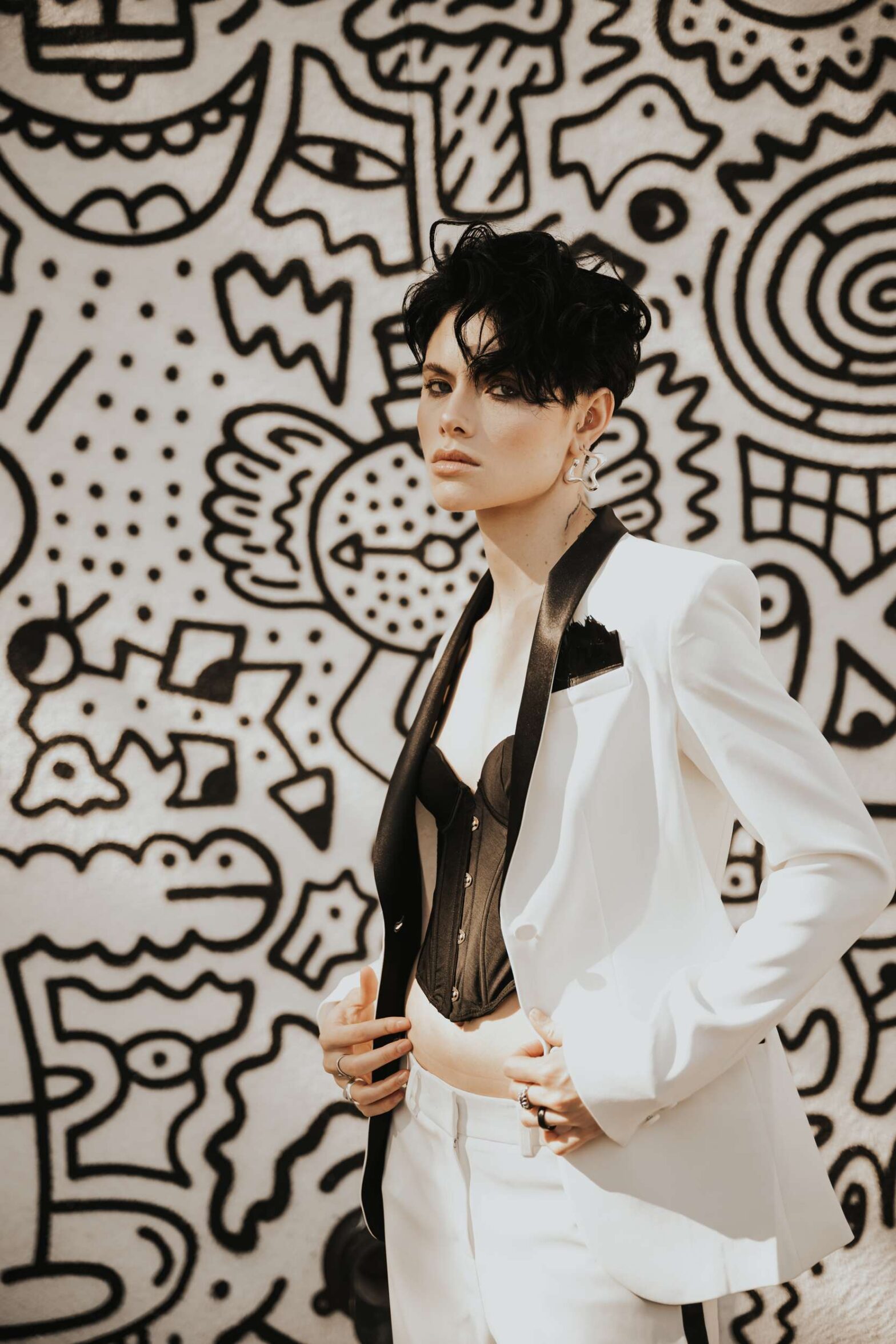
Wedding magazines have spent decades explaining how to find the right dress. Silhouettes, necklines, trains, veils, fittings and alterations have all been analysed to death. But if you want to get married in a suit the advice becomes considerably less helpful.
The problem is that most womenswear often treat a suit as office clothing, so the options can feel somewhat corporate and honestly, pretty boring. Menswear may offer more choice and options for customisation, but the clothes are designed around a different set of body proportions. Neither route feels particularly promising.
The idea of wearing a suit for your wedding isn’t even that unusual. There are many iconic celebrity brides you can look to for inspiration. Bianca Jagger chose a white Yves Saint Laurent skirt suit for her 1971 wedding, worn with a veiled hat and no shirt underneath. Amal Clooney wore a cream Stella McCartney trouser suit and wide-brimmed hat for her civil ceremony. Marilyn Monroe wore a dark brown skirt suit for her wedding to Joe DiMaggio in 1954. And more recently, Dua Lipa wore a custom Schiaparelli skirt suit for her civil wedding to Callum Turner at Old Marylebone Town Hall.
What to Look For
Start by forgetting the idea that there is one correct way for a suit to fit. Some people want a close, traditionally feminine cut with a defined waist. Others want a straighter or more masculine shape. You might want oversized proportions, a cropped jacket, wide-leg trousers or a skirt.
Collect references before you book an appointment or begin ordering. Look beyond wedding content and save pictures of musicians, film characters, runway looks and red-carpet tailoring. Pay attention to the proportions. Do you keep choosing long jackets or cropped ones? Wide trousers or cigarette cuts? Soft shoulders or a strong, structured line? Show the person helping you what you like and explain how you want to feel in it. “I want a masculine shape without looking like I borrowed somebody else’s suit” is useful information.
Made to Measure
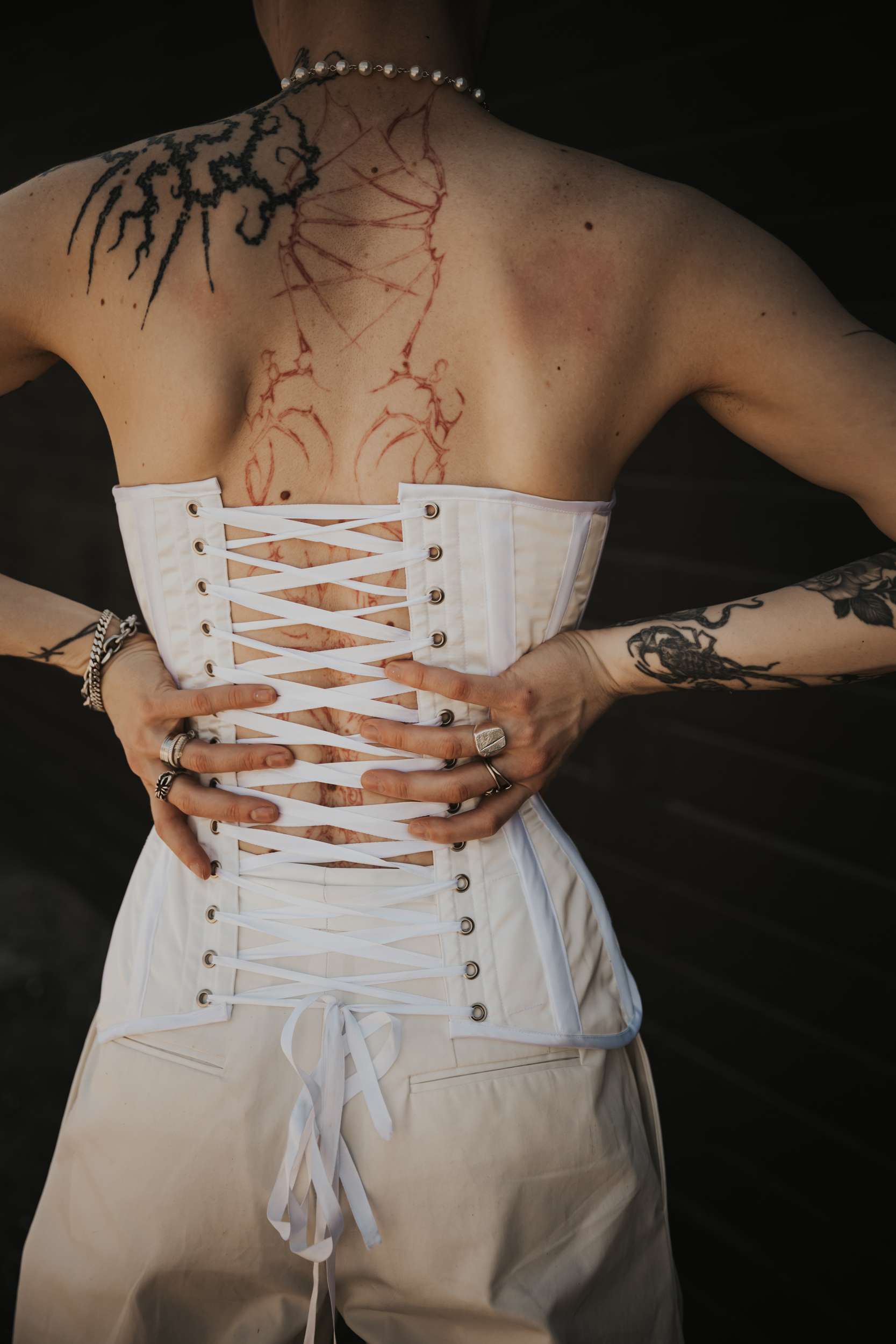
Made-to-measure tailoring gives you the greatest control. It is also usually the most expensive option, so decide which details matter before your appointment. Going this route means you will be able to choose the exact fabric, lining, lapels, buttons, pockets, trouser shape and embroidery that you want.
Be sure to ask what is included in the price, how many fittings you will have and whether alterations are covered. You’ll need to allow several months for the process, with extra time before the wedding in case anything needs changing.
The right tailor should listen without making assumptions about your body, gender, sexuality or the role you are taking at your wedding. Any custom tailor worth their salt should be able to create suits for women so don’t be afraid to ask whether they have worked with women, trans and non-binary clients before. Look through their previous work. A tailor who produces beautiful suits for cisgender men may still struggle to create the shape you want on a body with a fuller chest, hips or thighs.
High Street and Off The Peg
If made-to-measure prices are out of reach, an off-the-peg suit plus alterations can work brilliantly. Concentrate on the areas that are difficult or expensive to change. The jacket should fit across the shoulders, sit smoothly around the neck and give you enough room through the chest and upper arms. Trousers need to feel comfortable through the rise, hips and thighs. A tailor can usually shorten sleeves and trouser legs, adjust the waist and refine the shape of a jacket. Rebuilding shoulders or significantly altering the rise of a pair of trousers is a much bigger job.
Buy the size that fits the largest part of your body and have the rest taken in. Ignore the number on the label! Suit separates can make the process much easier because few people are exactly the same standard size on top and bottom.
Take the shoes, shirt and underwear you plan to wear when you go and try things on. If you will be wearing a binder, bra, corset or shapewear, bring that too. These pieces change how a jacket sits.
A Few Places We Love
King & Allen creates made-to-measure suits and actively works with women, trans, non-binary and genderqueer clients. Its consultations focus on the wearer’s preferred shape and style rather than imposing a gendered template.
Gresham Blake is a strong option for anyone who wants British tailoring with more personality. Think bold fabric, printed lining, colour and details that move the suit well away from office territory.
Sumissura offers custom-sized suits ordered online, with a choice of fabrics, colours and design details. This can provide a more accessible route into made-to-measure, although you may still want a local tailor to make final adjustments once it arrives.
Queer Suits You is based in Portsmouth and creates made-to-measure suits specifically for queer clients. In-person and remote appointments are available, making it worth investigating if conventional tailoring spaces have never felt particularly welcoming.
Coast carries occasion-focused tailoring, including white and coloured separates. It is a useful place to look for an off-the-peg suit that already feels closer to wedding wear.
Because of Alice offers modern tailoring with wide-leg trousers, oversized jackets, waistcoats, halter tops and shorts. Its current range only runs from XS to XL, so the sizing is limited, but the separates offer plenty of styling possibilities.
ASOS is worth checking on a tighter budget. Search across its women’s, men’s, petite, tall and curve ranges rather than restricting yourself to one department. Its own-brand separates often appear in brighter colours and less corporate cuts.
Knatchbull sits at the luxury end of the scale. Formerly known as The Deck London, it specialises in Savile Row tailoring for women and offers ready-to-wear, made-to-measure and bridal options.
Make It Yours
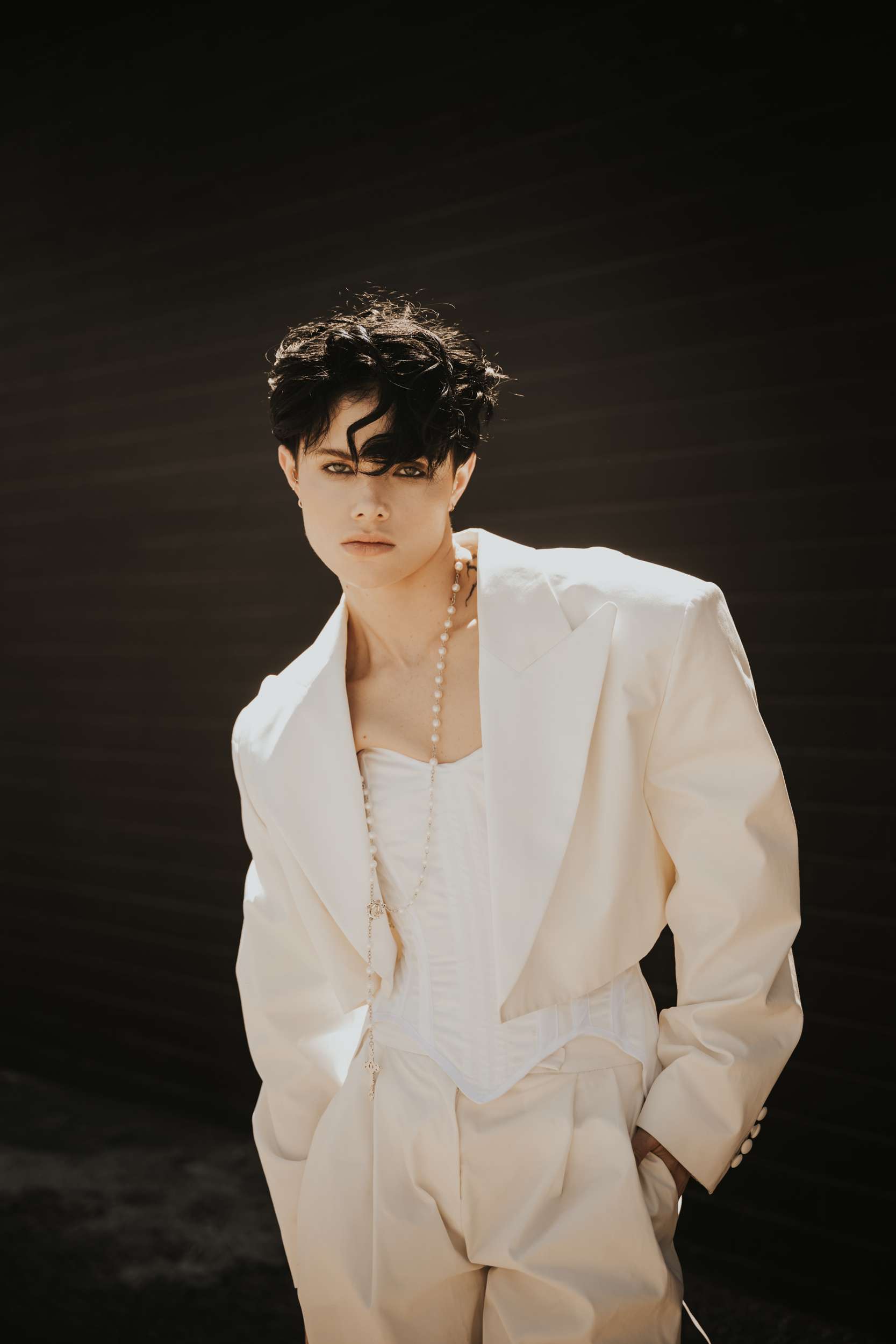
Once the foundations are right, the styling can go anywhere. Add a lace shirt, cowboy boots, a bolo tie, platform loafers, pearls, chains, a veil or an enormous hat. Match your partner, clash with them or keep your outfits completely separate until the ceremony. You do not need to take on the traditional “groom” look because you chose trousers, and you do not have to soften a masculine suit to make it bridal.
The point is to recognise yourself when you put it on. Your wedding deserves better than settling for the least-worst navy blazer because nobody thought to show you another option.
Reblogged 1 hour ago from www.rocknrollbride.com